Fire watch
BEYOND
THE SPARK.
A pilot concept for industrial hot-work monitoring. Connect stationary sensing, AI-assisted event assessment and thermal drone verification in one coordinated workflow.
Discuss a Fire Watch pilotExplore the workflow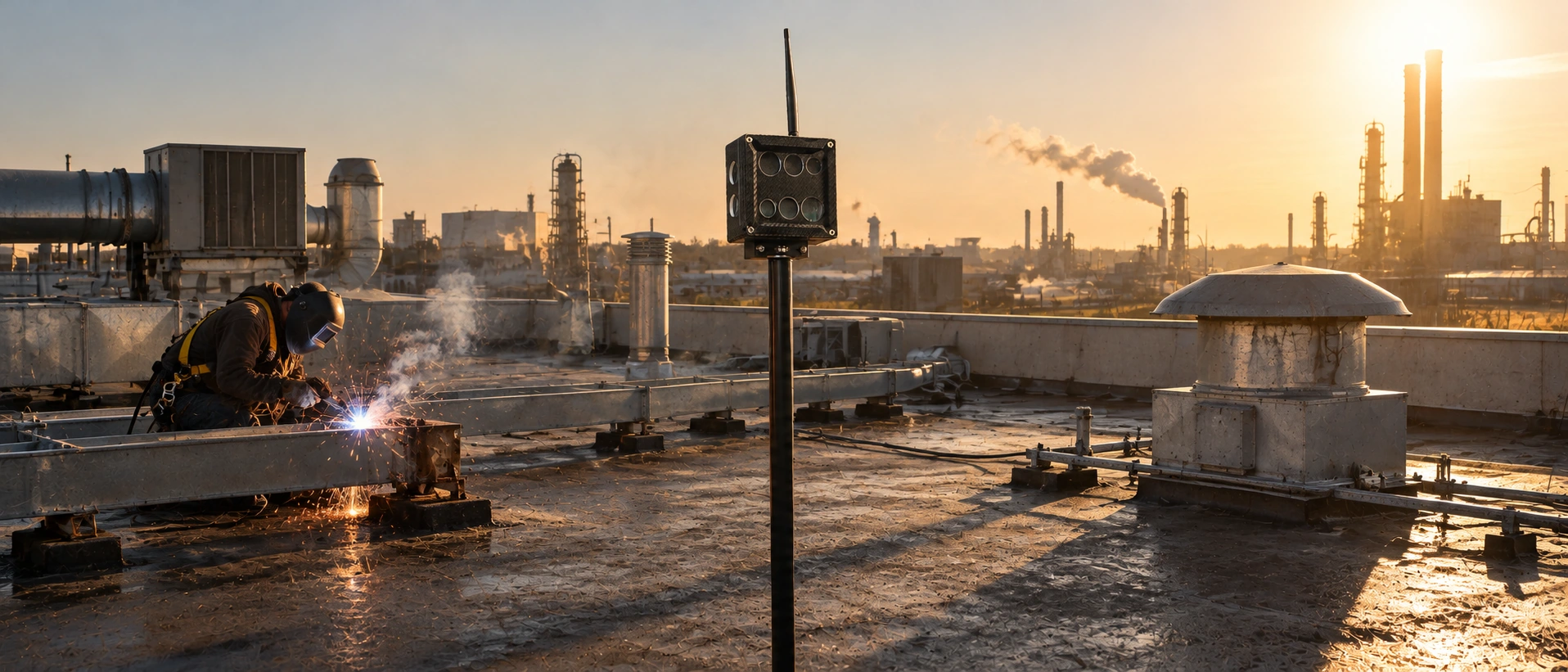
EARLY SIGNALS.
INFORMED DECISIONS.
Bring sensor data, visual context and your security team into the same decision process.
- 01
Sense
Stationary pods collect gas and particle data close to the active work zone.
- 02
Assess
AI-assisted analysis is designed to identify relevant patterns and support event assessment.
- 03
Verify & notify
The proposed workflow adds thermal drone verification and alerts to site security.
CLOSE TO
THE SOURCE.
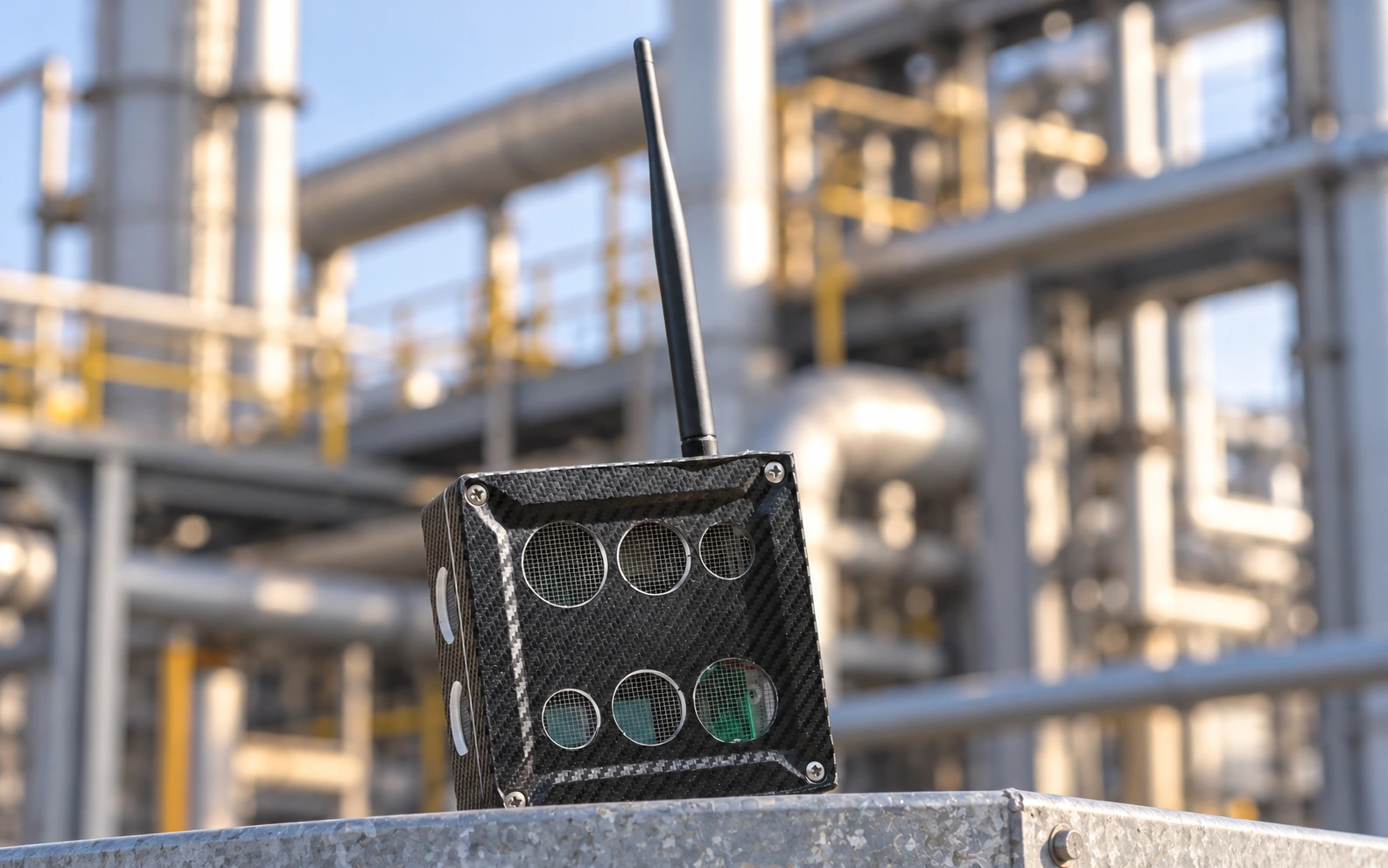
A modular sensor concept for observing industrial welding zones and bringing their status together.
Gas & particle sensing
The proposed pods capture gas and particle data near the work area. Sensor placement is defined for the site and activity.
AI-assisted assessment
Combine incoming signals with event analysis to support the assessment of relevant changes.
Wireless connectivity
The sensor architecture uses wireless data transmission to bring local indications into the wider workflow.
Multiple zones, one view
The concept includes a central overview of live status across monitored work zones.
Airflow-informed placement
Explore how wind and site conditions may carry emissions towards the proposed sensors. Use CFD-informed planning to compare positions, then validate them in the pilot.
Explore airflow planningFOLLOW
THE AIRFLOW.
Computational fluid dynamics (CFD) models air movement and helps explore how smoke and heat may travel towards sensors.
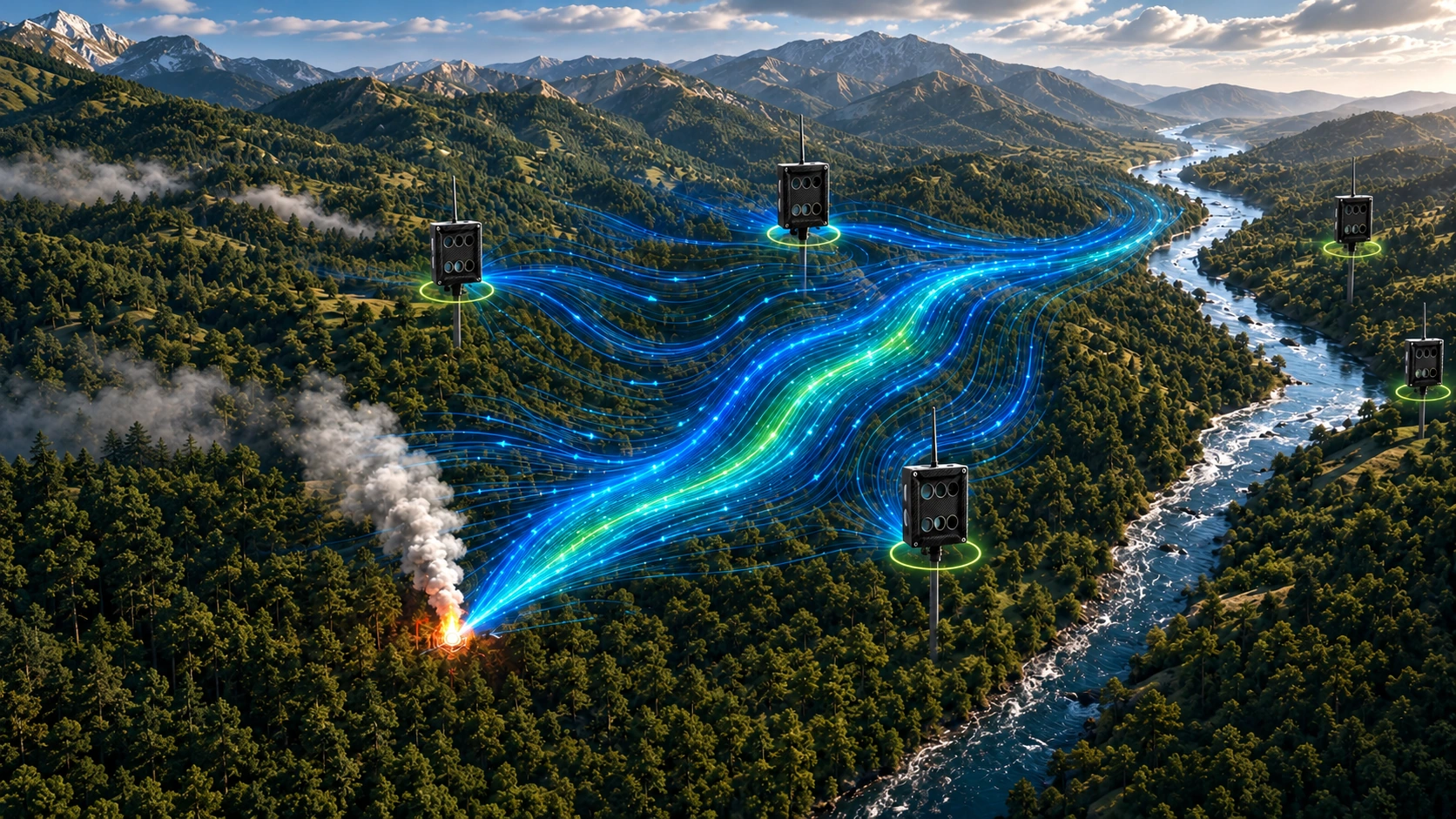
The forest example illustrates an airflow principle. Industrial work-zone planning needs the actual site geometry and operating conditions.
Place sensors with the conditions in mind.
Use modelled transport paths to compare candidate sensor positions. Wind and local conditions can change how emissions reach a sensor, so placement needs a site-specific assessment.
- Wind
- Wind direction and speed.
- Atmosphere
- Temperature, humidity and atmospheric stability.
- Terrain & source
- Terrain geometry, height above ground and heat at the source.
Check the proposed positions and operating assumptions in the real work zone. A planning illustration does not establish a guaranteed detection radius.
A SIGNAL.
ANOTHER VIEW.
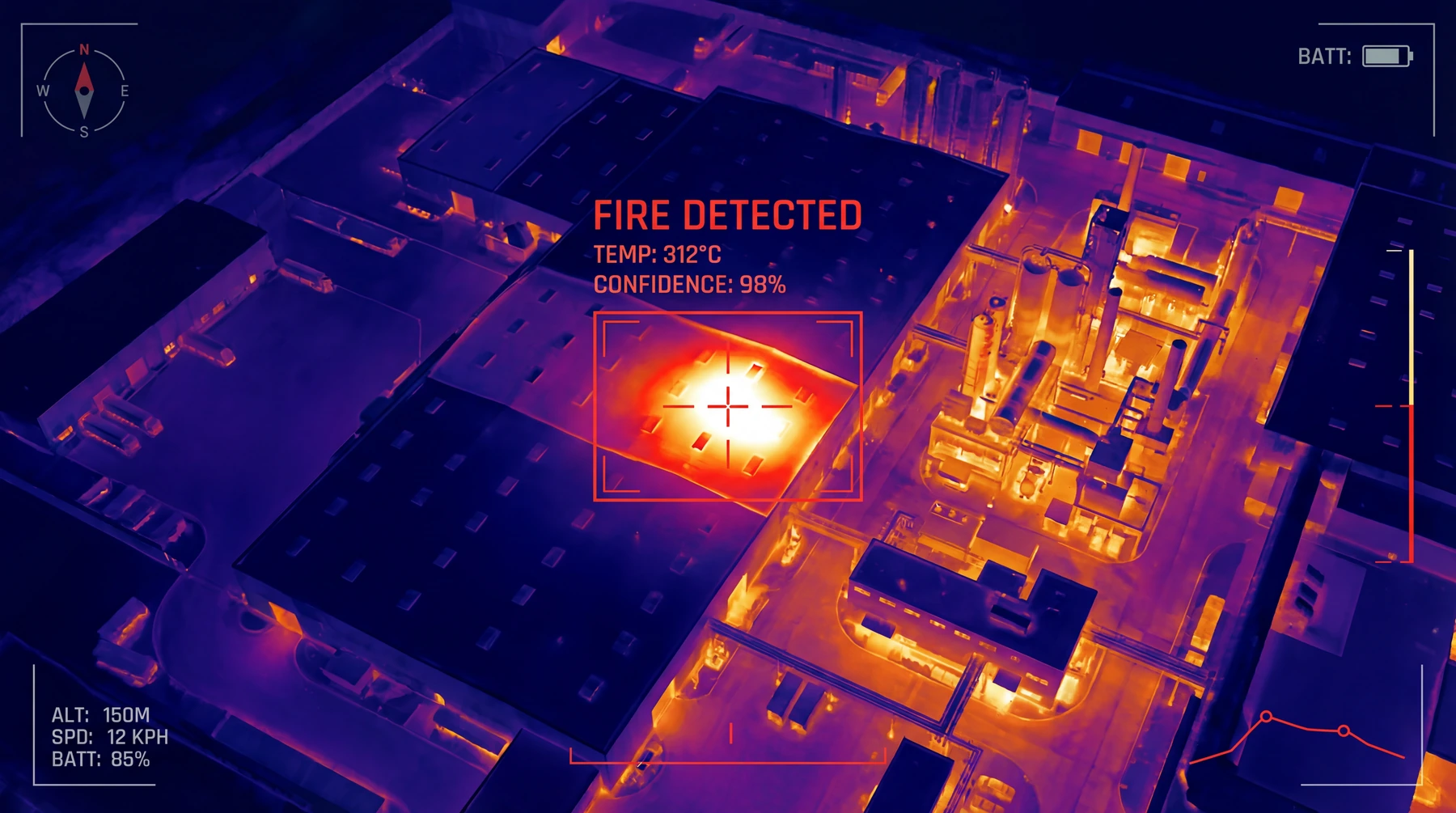
Concept visualization. Temperature, confidence and flight data shown in the image are illustrative examples, not validated performance figures.
Add the view from above.
The proposed verification chain uses a drone to inspect an indicated event thermally and help locate a hotspot. Your security team uses that context to assess the next step.
- 01
Thermal verification
Inspect the indicated area with a thermal camera.
- 02
Hotspot localisation
Bring the location and thermal context together for review.
- 03
Coordinated escalation
Align alerts and follow-up actions with site security procedures.
YOUR SITE.
YOUR WORKFLOW.
Start with a structured pilot.
Define the work zones, airflow assumptions, sensor positions and notification responsibilities before deployment. Evaluate the concept alongside your existing fire-watch processes.
Operational responsibility remains with the responsible security service. The pilot is intended to validate the workflow in the specific operating environment.
- 01
Alarm quality
Assess relevant events, alerts and the evidence needed for a decision.
- 02
Operational stability
Observe sensor behaviour and the verification workflow under real working conditions.
- 03
Process integration
Review how the system fits your team, escalation chain and daily operation.
- 04
Placement validation
Compare modelled transport paths with site observations and review the proposed sensor positions under relevant wind conditions.
START WITH YOUR WORK ZONE
LET’S DEFINE
YOUR FIRE WATCH.
Tell us about your hot-work areas, site conditions and current fire-watch processes. Together, we can scope a suitable pilot.
Discuss a Fire Watch pilotPlan the next step with the Neural Drones team